

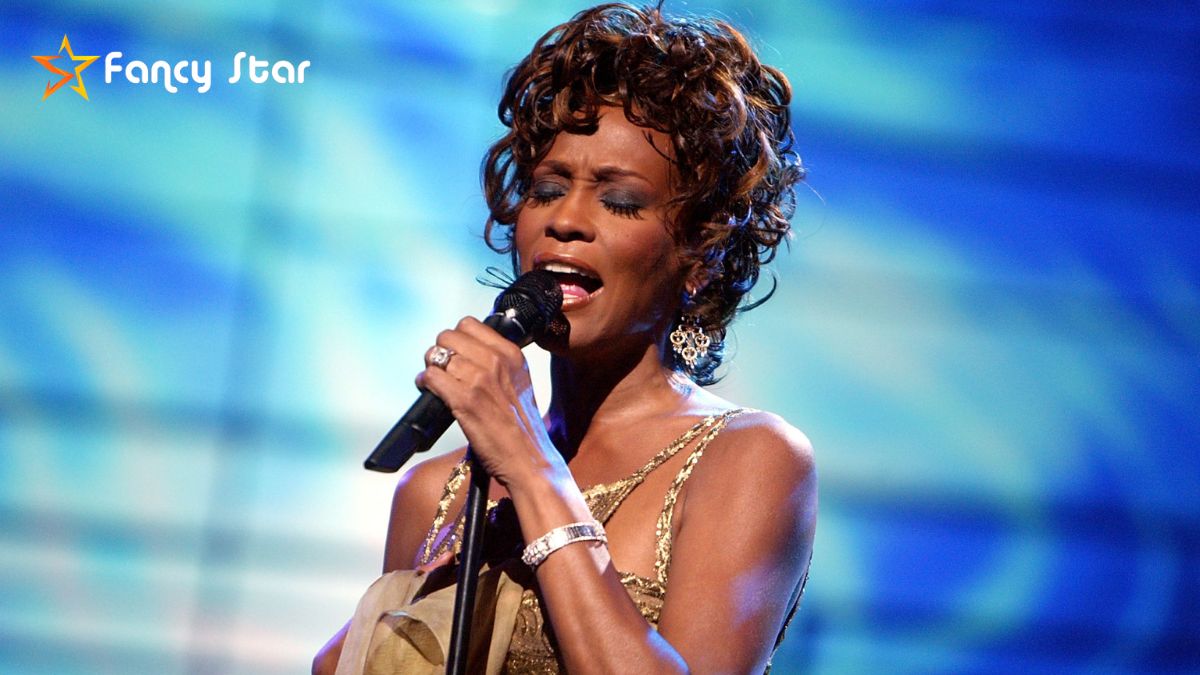
Whitney Houston revolutionized pop music forever by shattering records, breaking racial barriers, and setting new standards for vocal excellence. Her debut album's success in 1985 made her an instant icon, and she continued to dominate with chart-topping hits and seven consecutive number-one singles. Whitney's live performances, like her unforgettable national anthem at Super Bowl XXV, redefined what's possible on stage. She also broke ground as one of the first female and black artists to achieve monumental crossover appeal. Her legacy continues to influence today's musicians, showing us how she changed the landscape of pop music. Curious about her impact?

Whitney Houston's early life was deeply intertwined with music, setting the stage for her future stardom. Born on August 9, 1963, in Newark, New Jersey, Whitney had a remarkable musical lineage. Her mother, Cissy Houston, was a Grammy-winning gospel and soul singer, and her father, John, was a former Army serviceman turned administrator.
Growing up in a family with such a rich musical background, Whitney was surrounded by influential figures like Dionne Warwick and Aretha Franklin. These connections gave her an extraordinary foundation in music.
From a young age, Whitney's talent was evident. She started her music career as a background singer in her mother's band in New York. This early exposure to the music scene not only honed her skills but also gave her invaluable industry experience.
By the time she was 19, Whitney's potential was undeniable, leading her to sign her first record deal with Arista Records in 1983.
Her family's influence and her gospel singer roots profoundly shaped her career, preparing her to make a revolutionary impact on pop music. Whitney Houston's journey from her New Jersey origins to global superstardom was a tribute to her exceptional talent and strong musical heritage.
We can trace Whitney Houston's incredible rise to stardom back to her early record deal with Arista Records in 1983 when she was just 19.
Her self-titled debut album, released in 1985, not only became the best-selling debut album by a female artist but also produced three consecutive number-one singles.
This success set the stage for her influential career and her rapid ascent to becoming a pop music icon.
In the early 1980s, a remarkable young talent caught the attention of the music industry, leading to a pivotal moment in 1983 when Whitney Houston signed her first record deal with Arista Records at just 19 years old. This moment marked the beginning of a journey that would see Houston rise to unparalleled heights in pop music.
Houston's debut album, "Whitney Houston," released in 1985, quickly established her as a formidable force. It didn't take long for the album to climb the charts, ultimately becoming the best-selling debut album by a female artist at the time. This was just the start of her influence; her ability to captivate audiences with her powerful voice and emotive performances was undeniable.
Her success didn't stop there. Both her debut album and her follow-up, "Whitney," soared to the number-one spot on the Billboard 200 chart, cementing her status as a pop music icon.
The achievements of her early record deal weren't just commercial but also revolutionary in their impact. Whitney Houston's early career laid the groundwork for a legacy that continues to inspire and influence the music industry.
Few debut albums have made as seismic an impact as Whitney Houston's self-titled release in 1985. With over 30 million copies sold worldwide, it didn't just mark her arrival on the music scene—it announced her as a force to be reckoned with. The album produced three consecutive number-one singles on the Billboard Hot 100, a feat that solidified her status in pop music. Tracks like "Saving All My Love for You," "How Will I Know," and "Greatest Love of All" became anthems, each showcasing her vocal prowess and emotional depth.
In addition to its chart-topping singles, Whitney Houston's debut album became the best-selling debut album by a female artist at the time. Staying at the top of the charts for 14 non-consecutive weeks, it was clear that her talent resonated with listeners across the globe. This immense success established Whitney Houston as a pop music sensation and laid the foundation for her groundbreaking career.
We can't overlook how this debut album not only captured the hearts of millions but also revolutionized the landscape of pop music forever. Whitney Houston's debut was nothing short of a phenomenon.
Emerging from the shadows of her mother's gospel band in New York, Whitney Houston's early career as a background singer was pivotal in shaping her future success. Whitney Houston learned the ropes of the music industry while honing her vocal skills behind the scenes. Her mother, Cissy Houston, a Grammy-winning gospel singer, provided a substantial music education that laid the groundwork for Whitney's career development.
We can see how Whitney's background singing experience became an essential stepping stone. It wasn't just about singing; it was about understanding harmony, timing, and the nuances that make performances exceptional. This period allowed Whitney to cultivate a discipline and vocal prowess that would later define her as a solo artist.
When Whitney signed her first record deal with Arista Records in 1983 at the age of 19, she smoothly shifted from background singer to solo artist. This leap showcased her incredible talent and prepared her to revolutionize pop music.
Her early experiences in the background not only polished her vocal skills but also provided a solid foundation for her monumental success. Whitney Houston's journey from backup vocalist to pop icon underscores the importance of foundational experiences in shaping an extraordinary career.
Let's look at how Whitney Houston's breakthrough albums changed the pop landscape.
Her 1985 self-titled debut album produced three consecutive number-one singles, setting the stage for her meteoric rise.
Then, her 1987 follow-up, "Whitney," debuted at number one on the Billboard 200, solidifying her status with four more chart-topping hits.
With her self-titled debut album released in 1985, Whitney Houston didn't just enter the music scene; she dominated it. Whitney Houston's debut album didn't just produce hits; it gave us three consecutive number-one singles on the Billboard Hot 100. We saw her achieve something rare and remarkable as her debut spent 14 non-consecutive weeks at the top of the charts. This wasn't just a fleeting moment of fame—it became the best-selling first album by a female artist at that time.
Houston's chart-topping success was a tribute to her talent and appeal. She quickly solidified her status as a pop star with a groundbreaking career ahead of her. The young vocalist showcased an unmatched ability to connect with audiences, blending powerful vocal performances with an approachable yet glamorous persona.
The impact of Whitney's debut wasn't just about numbers and chart positions; it was about setting a new standard. Her unmatched success paved the way for future artists and redefined what a first album could achieve.
We witnessed the emergence of a powerhouse vocalist whose influence would ripple through the music industry, making her a true legend in pop music.
Upon releasing her second album, "Whitney," in 1987, Whitney Houston didn't merely continue her success; she shattered records. "Whitney" debuted at number one on the Billboard 200 chart, making her the first female artist to accomplish this feat. This record-breaking follow-up album wasn't just a commercial triumph; it solidified Houston's status as a chart-topping powerhouse.
"Whitney" produced an astounding four number-one singles, a remarkable achievement that further showcased her dominance in the music industry. The album spent 11 weeks at the top of the Billboard 200 chart, proving her immense popularity and staying power. With these accomplishments, Houston didn't just set records; she redefined what was possible for female artists in pop music.
Consider these groundbreaking achievements:
First female artist to achieve both a number-one debut and multiple chart-topping singles.
Cemented her place as a pioneering and record-breaking artist.

Whitney Houston's dominance on the charts began with a record-breaking streak of seven consecutive number-one hits on the Billboard Hot 100, an achievement unmatched since 1988. This incredible feat marked the beginning of a career that would forever change the pop music industry. Her self-titled debut album and its follow-up, "Whitney," both topped the Billboard 200 chart, solidifying her status as a chart-topping powerhouse.
Houston's ability to cross genres and appeal to both R&B and pop audiences showcased her versatility. Her chart-topping hits weren't just about numbers; they highlighted her groundbreaking impact on the music world.
"The Bodyguard" soundtrack, featuring her iconic rendition of "I Will Always Love You," sold over 45 million copies worldwide, further proving her unparalleled influence.
With over 200 million records sold globally, Whitney Houston's success wasn't limited to just hit singles. Her albums consistently topped charts, and her music resonated with a diverse audience. We can see how her chart-topping hits and albums not only set records but also revolutionized the pop music industry, leaving a lasting legacy that continues to inspire artists today.
Throughout her career, one of the defining aspects of Whitney Houston's legacy is her iconic performances. Her rendition of the national anthem at Super Bowl XXV in 1991 stands out as one of the greatest ever, mesmerizing the hearts of millions. This performance didn't just elevate the moment; it set a new benchmark for how the anthem should be sung.
In 1994, Houston delivered a live performance of "I Will Always Love You" at the Grammy Awards that left an indelible mark on music history. The emotional depth and vocal power she displayed were nothing short of awe-inspiring.
Let's not forget her portrayal of Rachel Marron in "The Bodyguard," which showcased her multifaceted talent.
Whitney Houston's enchanting stage presence and emotional delivery set a new standard for live music shows, forever revolutionizing pop music.
Diving into the world of film, Whitney Houston didn't just dabble—she made a lasting impact that extended her legacy beyond music. Her film ventures began with the blockbuster "The Bodyguard," which grossed over $390 million worldwide. This movie success was amplified by her iconic rendition of "I Will Always Love You," earning her two Grammy Awards and cementing her place in pop culture.
But Whitney didn't stop there. She demonstrated her actress versatility in other successful films like "Waiting to Exhale" and "The Preacher's Wife." In "Waiting to Exhale," she captivated audiences with her emotional depth, while in "The Preacher's Wife," she combined her musical and acting talents to bring a heartwarming story to life.
The soundtrack album for "The Bodyguard" sold about 24 million copies, showcasing her ability to transcend the music industry and impact the film world. Each of her film ventures showed a different facet of her talent, proving that Whitney Houston was more than just a phenomenal singer; she was a multifaceted artist whose movie success solidified her as an entertainment icon. Through these films, Whitney's influence and legacy continue to resonate.
A lesser-known but profoundly impactful aspect of Whitney Houston's legacy is her charitable work. Beyond her incredible music career, Houston dedicated herself to philanthropic efforts that aimed to make a positive impact on society.
In 1989, she founded The Whitney Houston Foundation For Children, which focused on helping at-risk youths and supporting various community initiatives.
One of her most notable charitable acts was donating the proceeds from her iconic performance of "The Star-Spangled Banner" at Super Bowl XXV to charity. This gesture alone demonstrated her commitment to giving back.
Houston's participation in charity events like the Nelson Mandela 70th Birthday Tribute concert further showcased her dedication to raising awareness and funds for important causes. Through her charitable work, she consistently aimed to improve the lives of children and communities in need. Her efforts didn't just stop at financial contributions; she was actively involved in making a difference.
Whitney Houston's philanthropic efforts reflect her enduring commitment to charity and helping others.

While Whitney Houston's charitable endeavors showcased her compassionate spirit, her contributions to the music industry earned her unparalleled recognition and reverence. Thanks to her collaboration with Clive Davis, Houston's career skyrocketed, leading to her becoming the most-awarded female artist of all time. Her accolades include multiple Grammy Awards, American Music Awards, and NAACP Image Awards, highlighting her widespread appeal and exceptional talent.
Houston's induction into the Rock and Roll Hall of Fame in 2020 further solidified her legacy. This honor recognizes her revolutionary impact on pop music and her enduring influence on future generations of artists.
The Recording Academy has also celebrated her extraordinary achievements, underscoring her status as one of the greatest voices in music history.
Moreover, Houston's cultural impact extended beyond music awards. Her performances and recordings inspired numerous documentaries and biopics that explored her remarkable career. Institutions like the United Negro College Fund have acknowledged her contributions, underscoring her role as a pop music icon.
Houston's combination of vocal talent and stage presence has left an indelible mark on the industry. Her awards and recognitions are tributes to a career that revolutionized pop music forever.
Beyond her numerous awards and recognitions, Whitney Houston's lasting impact on pop music is undeniable. She broke records and set new benchmarks that reshaped the industry. With seven consecutive number-one hits on the Billboard Hot 100, she proved her ability to captivate audiences consistently. Her self-titled debut album made her the best-selling debut artist, a reflection of her immediate and profound influence.
Whitney's iconic performance of the national anthem at Super Bowl XXV remains one of the most memorable moments in music history. Her rendition transcended the event, becoming a defining episode in her career. Selling over 200 million records worldwide, her impact on pop culture is vast and far-reaching.
Houston's legacy continues to inspire younger generations of singers, who look up to her as a standard of excellence. Her vocal prowess, stage presence, and emotional depth are qualities that many aspire to mirror.
Whitney Houston's legacy isn't just a memory; it's a living influence that shapes the music world today.
After Whitney Houston's passing, the music industry and her fans have continued to celebrate her extraordinary contributions. In 2020, she was posthumously inducted into the Rock and Roll Hall of Fame, a reflection of her enduring impact on music. This honor cements her legacy as one of the most influential artists of all time.
In 2013, her compilation album "I Will Always Love You: The Best of Whitney Houston" won the Outstanding Album category at the NAACP Image Awards. This recognition highlights the lasting appeal and emotional depth of her music.
Additionally, her album "Her Greatest Performances" debuted at No. 1 on Billboard's Top R&B Albums chart in 2014, showcasing her timeless talent and continued relevance in the music world.
Houston's legacy lives on through various tributes and collaborations by current artists. Many have honored her through tribute performances and by sampling her iconic tracks. These acts of homage underscore the profound influence she's had on contemporary music.
Her voice and artistry continue to inspire new generations, ensuring that her contributions to pop music won't be forgotten. Whitney Houston's posthumous recognitions reflect a legacy that remains vibrant and influential.
We can see Whitney Houston's influence on pop music through her groundbreaking achievements: debuting at No. 1, setting records with seven consecutive No. 1 hits, and breaking racial barriers. Her vocal talent and stage presence still inspire artists today.
Whitney Houston's voice deteriorated due to vocal nodules, substance abuse, smoking, and poor vocal techniques. Over time, these factors strained her voice, leading to noticeable struggles in live performances. Despite this, her emotional artistry remained impactful.
We believe Whitney Houston is indeed the Queen of R&B. Her unmatched vocal talent, emotional delivery, and ability to blend genres set new standards. Houston's influence continues to inspire artists today, confirming her legendary status in R&B.
Yes, Whitney Houston did surpass the Beatles with her seven consecutive number-one singles on the Billboard Hot 100. This impressive feat highlights her extraordinary talent and sets her apart as an iconic figure in pop music history.
In reflecting on Whitney Houston's extraordinary journey, we recognize how she transformed pop music and left an indelible mark on the industry. From her early life and career beginnings to her breakthrough albums and iconic performances, Whitney set new standards. Her charitable efforts and numerous accolades further cemented her status. Even after her passing, her influence remains. We're forever grateful for her contributions and the lasting legacy she left for future generations of artists and fans.