


We've gathered a list of the top 10 jazz legends who've truly shaped this incredible genre. Louis Armstrong's inventive trumpet playing and Duke Ellington's timeless compositions both stand out. We can't overlook Charlie Parker's revolutionizing bebop and Miles Davis's relentless experimentation. John Coltrane's profound depth and Thelonious Monk's unique piano style have left lasting marks. Ella Fitzgerald's scat singing and Billie Holiday's soulful voice still inspire. Art Tatum's technical prowess and Chick Corea's fusion work also deserve mention. These legends continue to inspire, and there's a wealth of fascinating details about each of them.
Louis Armstrong transformed jazz with his pioneering trumpet playing and captivating stage presence. As a jazz icon, Armstrong's inventive approach to trumpet playing set new benchmarks in the music world. His mastery of phrasing and improvisation was unparalleled, making him a trailblazer in hot jazz and helping to lead the shift to swing and modern jazz.
His heartfelt, expressive voice and dynamic performances made him an unforgettable figure in jazz. Armstrong wasn't just a musician; he was a performer who deeply connected with his audience, conveying profound emotions through each note.
Armstrong also played a pivotal role in breaking down racial barriers. At a time when segregation was widespread, his talent transcended racial boundaries, bringing people together through the universal language of music. His success on the global stage helped popularize jazz worldwide, highlighting the genre's rich cultural heritage.
His lasting legacy lies in his ability to innovate and connect. Louis Armstrong's contributions to jazz are timeless, making him a true icon whose influence continues to inspire musicians and fans alike.

While Louis Armstrong was revolutionizing jazz with his trumpet, Duke Ellington was crafting timeless compositions that would define the big band era. As a prolific composer, Ellington produced classics like 'Mood Indigo' and 'Sophisticated Lady,' which remain cornerstones of the genre. His innovative approach to big band jazz set new standards and left a lasting impact that resonates even today.
Ellington wasn't just a brilliant jazz composer; he was an iconic figure whose influence extended far beyond his music. Over his illustrious career, he received an impressive 12 Grammy Awards, a clear proof of his talent and enduring appeal. These accolades highlight his contributions to jazz and affirm his position as one of the greatest jazz composers of all time.
Adding to his legacy, Duke Ellington was inducted into the Grammy Hall of Fame, further solidifying his status in the pantheon of jazz legends. His compositions, characterized by their complexity and elegance, have inspired countless musicians and continue to be celebrated. Ellington's work in big band jazz exemplifies the genre's richness and depth, making him an indispensable figure in the history of jazz music.
Let's turn our attention to Charlie Parker, the pioneering force behind the bebop revolution. Known as 'Bird,' he captivated audiences with his virtuosic saxophone mastery and innovative improvisations.
Parker's groundbreaking contributions have left an indelible mark on jazz history and continue to inspire musicians today.
In the 1940s, Charlie Parker, affectionately known as 'Bird,' spearheaded the bebop revolution with his groundbreaking saxophone artistry. Parker's virtuosic saxophone playing transformed the jazz landscape, introducing intricate improvisations and complex harmonic structures that hadn't been heard before.
His compositions like 'Yardbird Suite' and 'Ornithology' are bebop classics, demonstrating his exceptional talent and creativity. Parker's influence on jazz can't be overstated. He pushed the boundaries of traditional jazz, paving the way for future generations of musicians.
Let's look at four key aspects of his bebop revolution:
Charlie Parker's contributions to bebop cement his place in jazz history. His musical innovations not only defined a genre but also left an indelible mark on the world of jazz.

Charlie Parker's unparalleled skill on the saxophone redefined what it meant to be a virtuoso in jazz. As a saxophonist, Parker, affectionately known as 'Bird,' brought a level of technical proficiency and creativity that had never been seen before. His virtuosic command of the saxophone allowed him to revolutionize bebop jazz in the 1940s, setting a new standard for improvisational skills and intricate melodic lines.
Parker's compositions, such as 'Ornithology' and 'Yardbird Suite,' have become jazz standards, showcasing his mastery and innovative approach to saxophone playing. These pieces aren't just songs; they're demonstrations of his profound influence on the world of jazz. His improvisational skills were unmatched, turning spontaneous creativity into intricate, coherent musical phrases that defined the bebop era.
The profound influence of Parker's saxophone virtuosity extends far beyond his lifetime. Inducted into the Grammy Hall of Fame, his legacy continues to inspire generations of saxophonists and jazz musicians.
Charlie Parker wasn't just a saxophone virtuoso; he was a transformative figure whose contributions reshaped the landscape of jazz music, leaving an indelible mark on the genre.
Building on his virtuosic saxophone mastery, Bird's role as an influential jazz innovator can't be overstated. Charlie Parker, a pioneering figure in bebop jazz, revolutionized the genre with his virtuosic playing and innovative improvisation. His technical brilliance and melodic creativity are evident in his recordings, such as 'Ko-Ko' and 'Ornithology,' which have become staples in jazz history.
Parker's collaborations with fellow jazz legend Dizzy Gillespie were instrumental in shaping modern jazz. Together, they pushed the boundaries of what jazz could be, creating a sound that was both complex and exhilarating. Parker's influence extends far beyond his own performances; he laid the groundwork for future generations of musicians to explore and innovate.
Here are some key aspects of Parker's legacy:
Charlie Parker's contributions remain a cornerstone of jazz, inspiring musicians and delighting audiences worldwide.
Miles Davis revolutionized jazz with his innovative trumpet playing and mastery of silence. His groundbreaking trumpet playing wasn't just about hitting the right notes; it was about knowing when not to play. This unique approach allowed him to create a sound that was both powerful and introspective.
One of his most celebrated works, *Kind of Blue*, remains a genre masterpiece, reflecting his relentless pursuit of artistic innovation and his ability to assemble innovative ensembles.
Davis was more than just a musician; he was a transformative figure in jazz. His influence spanned various styles, from bebop to fusion, always pushing the boundaries of what jazz could be. His commitment to experimentation made him one of the most influential and iconic jazz legends of all time.
Miles Davis' lasting legacy isn't only found in his recordings but also in the countless musicians he inspired. His visionary approach and distinct style have shaped the course of jazz for generations.
We can't overstate his impact on the music world. Davis' relentless pursuit of innovation and his groundbreaking trumpet playing guarantee that his name will always be synonymous with jazz excellence.

As we explore John Coltrane's contributions, we can't overlook his revolutionary saxophone techniques that reshaped jazz.
His spiritual vision infused his music with a profound depth, making 'A Love Supreme' a timeless masterpiece.
Coltrane's relentless innovation continues to inspire and influence countless musicians today.
John Coltrane's revolutionary saxophone techniques shattered traditional improvisational and harmonic boundaries, reshaping the landscape of jazz music forever. Coltrane's innovative approach to the saxophone allowed him to explore new domains of musical expression. His mastery of improvisation and harmonic complexity not only set him apart but also inspired countless musicians.
In his groundbreaking album, A Love Supreme, we can hear the culmination of Coltrane's spiritual jazz journey. This album exemplifies his deep connection to his music and his relentless pursuit of artistic innovation. His pioneering techniques included:
These techniques didn't just revolutionize jazz; they bridged the gap between technical proficiency and emotional depth, influencing generations of musicians.
Coltrane's contributions to the world of jazz weren't just about breaking rules but about creating new ones. His dedication to innovation and spiritual exploration through music remains a beacon for artists worldwide.
Coltrane's revolutionary techniques weren't just about musical innovation; they were deeply intertwined with his spiritual quest, making him a true visionary in the domain of spiritual jazz. John Coltrane's innovative saxophone playing and compositions were more than mere technical achievements; they were expressions of his intense journey toward higher consciousness.
In 1965, Coltrane released the influential album *A Love Supreme*, which is widely regarded as a masterpiece of spiritual jazz. This album encapsulates his quest for a deeper spiritual connection and showcases his relentless pursuit of artistic innovation and harmonic exploration. Each note in *A Love Supreme* reflects Coltrane's profound spirituality, making it a transformative experience for listeners.
Coltrane's dedication to his craft and his spiritual beliefs set him apart as a spiritual jazz visionary. His music wasn't just about sound; it was about transcending the ordinary and reaching for the divine.
Through his innovative saxophone playing, Coltrane broke new ground and influenced generations of jazz musicians. His legacy as a transformative figure in jazz continues to inspire and resonate with audiences worldwide, reminding us of the power of music as a tool for spiritual and artistic expression.
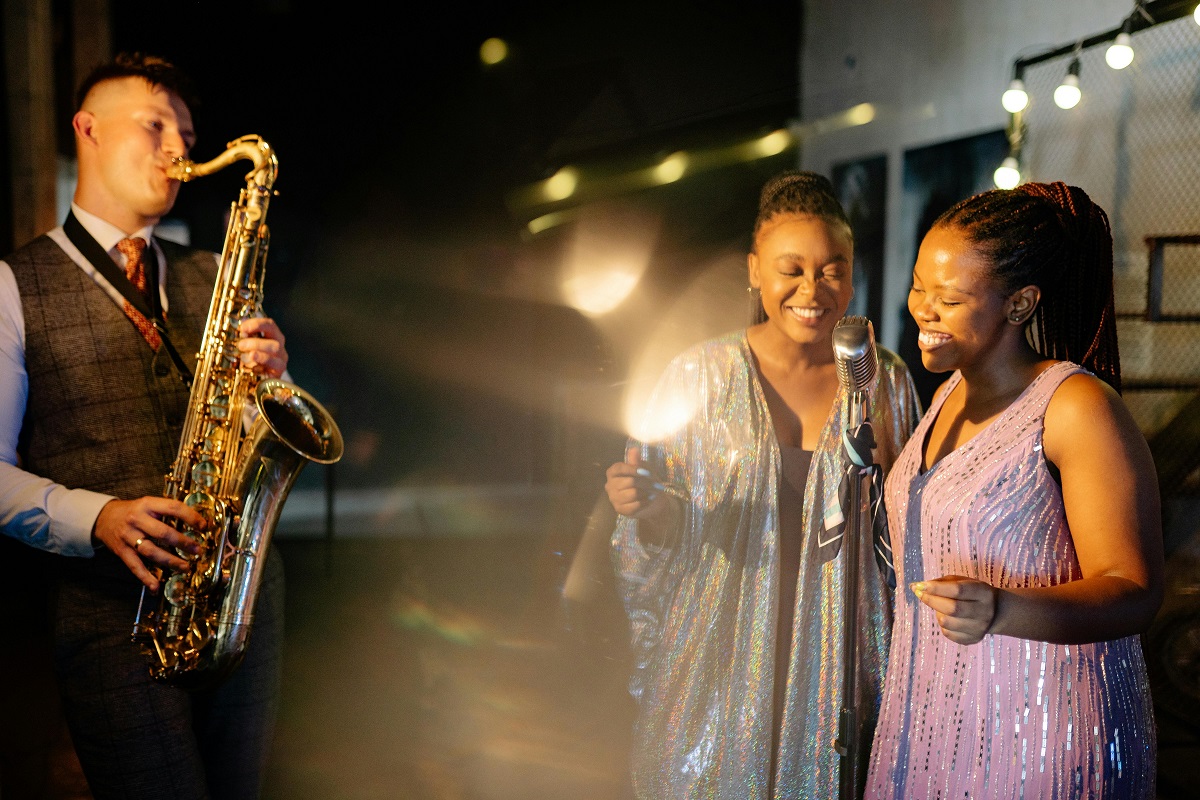
Billie Holiday's hauntingly soulful voice and profound emotional depth have cemented her as a true legend in the world of jazz. As an iconic jazz singer, her emotive delivery and timeless recordings like 'Strange Fruit' continue to move us deeply.
Holiday's signature phrasing and intimate expression set her apart as a pioneer in jazz and blues, making her a jazz vocal powerhouse whose influence spans generations.
Let's break down why Billie Holiday remains a towering figure in jazz:
Holiday's legacy isn't just in her music but in her ability to connect with listeners on a deeply personal level. Her evocative performances continue to inspire and resonate, solidifying her place as one of jazz's most enduring legends.
Let's explore Thelonious Monk, whose unique improvisational style and seminal compositions like 'Brilliant Corners' revolutionized jazz.
His angular, minimalist piano playing broke conventions and offered a fresh perspective on modern jazz.
Through his innovative approach, Monk has left an indelible mark on the world of music.
Exploring Thelonious Monk's unique improvisational style reveals a captivating blend of angular, understated piano mazes that intrigue with their raw complexity and surprising twists. Monk's approach to jazz is like no other, offering a private pleasure for those who venture into his musical labyrinths.
His angular melodies and understated techniques might appear simple at first, but they conceal a depth of emotion and raw complexity that are both challenging and rewarding.
Monk's unconventional approach to improvisation sets him apart, providing an invigorating perspective on jazz that reflects the rich tapestry of Black culture. His music is filled with unexpected twists that keep listeners on their toes, continually engaged and often delighted by the surprises around each corner.
To better understand Monk's unique style, consider these key elements:
Monk's improvisational style continues to inspire and captivate, making him a true legend in the world of jazz.
Monk's seminal jazz compositions, most prominently showcased in the album 'Brilliant Corners,' often surprise and captivate us with their innovative structures and profound emotional depth. As a jazz pianist and composer, Thelonious Monk brought a unique improvisational style that truly stands out. His seminal album 'Brilliant Corners' exemplifies his innovative approach to modern jazz composition, blending angular melodies with minimalist themes.
Monk's pieces are like child-like piano mazes, deceptively simple yet intricately complex. His use of dissonance and unexpected chord changes creates a soundscape that's both challenging and rewarding. This innovative approach has earned him comparisons to Picasso, as both artists transform their mediums with a similar sense of angularity and abstraction.
In 'Brilliant Corners,' we find a collection of compositions that explore deeply into the raw complexity of Black culture. Monk's music invites us to navigate a world of hidden profundities, offering a rich emotional experience beneath an apparently straightforward surface.
His influence on modern jazz composition is undeniable, and his work continues to inspire jazz musicians and listeners alike, cementing his place as one of the greatest jazz legends of all time.

Ella Fitzgerald's unmatched vocal talent and her pioneering contributions to jazz earned her the title 'The First Lady of Song.' We can't help but be enthralled by her ability to transform jazz with her extraordinary skill. As a jazz singer, Ella's scat singing abilities and broad vocal range set her apart, establishing her as a true legend in the genre. Her career, adorned with 13 Grammy Awards, showcased her remarkable accomplishments.
Let's explore a few highlights that solidify her legacy:
Ella Fitzgerald's contributions transcend her recordings; she left an enduring imprint on the jazz world, influencing generations of musicians and captivating audiences worldwide with classics like 'Misty' and 'Lullaby of Birdland.'
Art Tatum, with his extraordinary speed and dexterity on the piano, stands as one of the most influential jazz pianists in history. Despite being blind from a young age, he developed an innovative approach to jazz piano that has inspired generations of musicians.
We can't discuss celebrated jazz pianists without mentioning Tatum's remarkable technical prowess. His fingers seemed to dance effortlessly across the keys, creating complex and beautiful music that few could emulate.
Tatum's unique style wasn't just about speed; it was about the intricate and soulful way he connected with the music. His significant contributions to jazz are recognized worldwide, and his induction into the DownBeat Hall of Fame cements his place among the greats.
As a master of jazz piano, he pushed the boundaries of what was possible, both technically and creatively. His legacy lives on, influencing modern jazz pianists and reminding us of the power of innovation in music.
Art Tatum's work remains a benchmark for excellence in jazz, proving that sheer talent and an unparalleled approach can make a lasting impact. With every note, Tatum showed us what true musical mastery looks like.
Just as Art Tatum redefined the possibilities of jazz piano, Chick Corea pushed the boundaries of the genre with his innovative compositions and collaborations.
As a multi-Grammy Award-winning jazz pianist and composer, Corea's influence on jazz is undeniable. He stands as a pioneer in fusion jazz, constantly blending different styles to create something entirely new.
Collaborating with the legendary Miles Davis, Corea contributed notably to the evolution of jazz in the late 20th century. His compositions, such as 'Spain' and '500 Miles High,' have become classics, showcasing his incredible talent and creativity. These works haven't only inspired countless musicians but also captivated audiences worldwide.
Let's take a closer look at why Chick Corea is considered one of the top jazz musicians of all time:
In every sense, Chick Corea's contributions have left an indelible mark on the world of jazz.
We can't definitively choose the greatest jazz legend of all time. However, Duke Ellington, Louis Armstrong, Miles Davis, John Coltrane, and Billie Holiday all left an indelible mark on jazz, making each a strong contender.
We believe Louis Armstrong was the most influential jazz player of all time. His innovative trumpet playing, charming stage presence, and pivotal role in evolving jazz styles truly revolutionized the genre and left an indelible mark.
We can't unanimously agree on the best jazz singer of all time, but many believe Ella Fitzgerald's incredible range and versatility, along with Billie Holiday's emotive depth, make them top contenders for this prestigious title.
We believe Louis Armstrong is the most important jazz figure. His pioneering trumpet playing, innovative phrasing, and global influence revolutionized jazz. Armstrong's charisma and ability to break racial barriers left an indelible mark on the genre.
We've taken a journey through the lives and legacies of some of the most influential jazz legends ever. From Louis Armstrong's groundbreaking trumpet to Ella Fitzgerald's enchanting vocals, each artist has left an indelible mark on the world of music.
Their innovations, passion, and unique styles continue to inspire new generations. Let's keep their spirit alive by celebrating their contributions and sharing their incredible music with the world.
Jazz truly wouldn't be the same without them.